
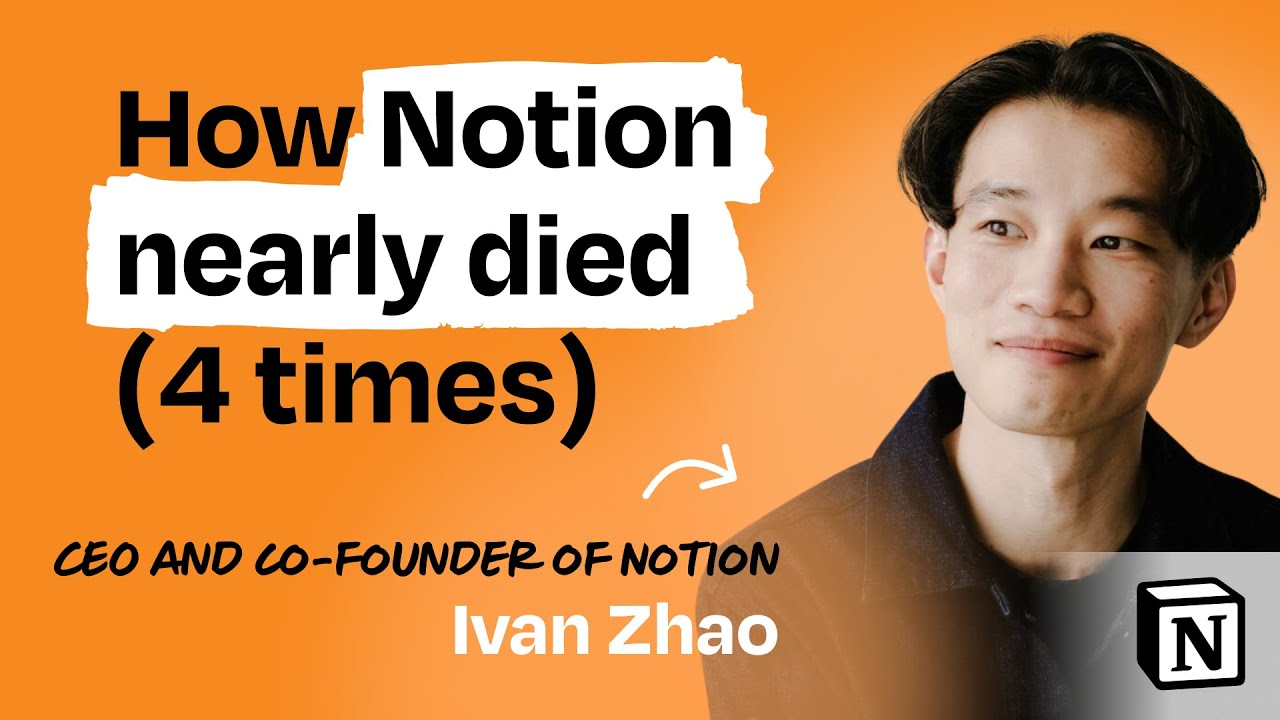
Notion's lost years, near collapse during COVID, staying small to move fast, building horizontal
Notion 失去的那些年:疫情期间几近崩溃,坚持小团队快节奏,构建横向产品

68 分钟阅读1 次阅读Podcasts
【创业复盘】Notion 消失的岁月:从濒临倒闭到协同办公巨头的涅槃之路 为什么 Notion 曾被迫在旧金山的小公寓里重写代码?创始人 Ivan Zhao 深度剖析了产品在快速增长中遭遇的技术负债,以及他们如何在疫情期间顶住诱惑,坚持“水平化(Horizontal)”构建。这不仅是一个关于工具的故事,更是关于在混乱中坚守设计哲学和长期主义的创业启示录。 🎙️ 访谈人物介绍 Ivan Zhao(赵伊):Notion 联合创始人。他将对字体学和设计史的热爱融入软件,开创了模块化协作的新范式,是硅谷公认的极简主义美学代表。 核心议题:创业早期融资困境、重写代码的艰难抉择、水平化产品增长策略、后疫情时代的团队哲学。 关键词:Notion、创业故事、生产力工具、产品哲学。
章节 1:少年往事——从边疆沙漠到编程与艺术的交汇
📝 本节摘要:
在本节中,主持人Lenny欢迎Notion联合创始人Ivan Zhao做客播客。对话从Ivan独特的成长背景展开:他出生于中国西北的乌鲁木齐(他幽默地指出这也并非真的是“小镇”),后来为了升学迁居北京。Ivan坦言他最初学习编程并非为了写代码,而是为了通过赢得信息学奥林匹克竞赛(Information Olympiad)进入好学校,同时满足自己玩电脑游戏的欲望。随后他移居加拿大,在大学期间修习艺术与科学。正是因为身处艺术圈,作为唯一的“极客”帮助朋友制作网页集(Portfolio),他意识到普通人缺乏驾驭软件媒介的能力,这成为了创立Notion的最初萌芽。最后,他还分享了一个有趣的细节:他是通过看《海绵宝宝》来学习英语语境和幽默感的。
[原文] [Lenny]: Ivan, thank you so much for being here, and welcome to the podcast.
[译文] [Lenny]: Ivan,非常感谢你的到来,欢迎做客本期播客。
[原文] [Ivan]: Thank you for having me.
[译文] [Ivan]: 谢谢邀请。
[原文] [Lenny]: I know you don't do a lot of podcasts, and so I'm very honored that you're here.
[译文] [Lenny]: 我知道你很少参加播客节目,所以你能来我感到非常荣幸。
[原文] [Lenny]: I want to start with the story of Ivan. Your background is quite unique for a founder of a $10 billion plus tech company, and I don't think a lot of people know it.
[译文] [Lenny]: 我想先从Ivan的故事开始。作为一家估值超过100亿美元的科技公司创始人,你的背景非常独特,而且我认为很多人并不了解它。
[原文] [Lenny]: For example, you grew up in a small town in China. And the way you got out of there, the way you got into tech is pretty interesting. Can you just walk us through that early years of Ivan and how you got out there?
[译文] [Lenny]: 比如,你是在中国的一个小镇长大的。你走出那里以及进入科技行业的方式都非常有趣。能不能带我们回顾一下Ivan的早年经历,以及你是如何走出来的?
[原文] [Ivan]: Yeah. I think a small town in China, the definition, it's actually 4 million people. It is called Urumqi. It's in the northwest desert part of China.
[译文] [Ivan]: 好的。我想关于中国“小镇”的定义,其实那里有400万人口。那个城市叫乌鲁木齐。它位于中国西北部的沙漠地区。
[原文] [Ivan]: So I grew up there and then I moved into... My mom took me to Beijing, the capital of China. And that's actually how I got into programming, coding, because I'm from somewhere else and in order to go into good school in the capital, you need to win some kind of competition.
[译文] [Ivan]: 我在那里长大,然后我搬到了……我妈妈带我去了中国首都北京。其实那就是我接触编程、写代码的契机,因为我是外地来的,为了能进首都的好学校,你需要赢得某种竞赛。
[原文] [Ivan]: And there's different paths. You can get at math or you can get at programming like Information Olympiad. I was really into computer games at the time so of course I picked the programming one so I can play computers all day long.
[译文] [Ivan]: 当时有不同的路径。你可以选数学,也可以选像信息学奥林匹克(Information Olympiad)这样的编程竞赛。那时候我非常迷恋电脑游戏,所以我自然选了编程这一项,这样我就能整天玩电脑了。
[原文] [Ivan]: And I win some competition and got me to a good school. So that's how I got into programming.
[译文] [Ivan]: 后来我赢了一些比赛,这让我进了一所好学校。这就是我进入编程领域的经过。
[原文] [Ivan]: Later then, I moved to Canada. When I moved to Canada, got into college, did not study computer science since I already knew how to code, but a lot of video games. Did a lot of art actually, art and science.
[译文] [Ivan]: 后来,我搬到了加拿大。当我到加拿大上大学时,我没有修读计算机科学,因为我已经会写代码了,(而且玩了)很多电子游戏。实际上我修了很多艺术课程,是艺术与科学。
[原文] [Ivan]: By the time I graduated college, I realized most of my friends are artists. They need to make their websites, get web portfolio made. And I'm the only nerd in my art friend circle so I made three or four websites and realized, "Oh, actually people don't know how to create with the software media, computing media."
[译文] [Ivan]: 等到大学毕业时,我意识到我的大多数朋友都是艺术家。他们需要制作网站,制作网络作品集(web portfolio)。而我是我的艺术朋友圈里唯一的“书呆子”(nerd),所以我帮他们做了三四个网站,通过这件事我意识到:“噢,原来人们并不知道如何利用软件媒介、计算媒介进行创作。”
[原文] [Ivan]: So that got me into want to create a product like Notion today which it allow more people to create tools, create software for their daily work and life.
[译文] [Ivan]: 这促使我想创造一个像今天Notion这样的产品,它能让更多人为他们的日常工作和生活创造工具、创造软件。
[原文] [Lenny]: Okay. So going back to get into a great school and to leave the small town, not so small, you had to enter a programming contest. And you placed first or second or how well did you actually do in this one?
[译文] [Lenny]: 好的。回溯到为了进好学校并离开那个小镇——虽然其实不算小——你不得不参加编程比赛。你当时是拿了第一名还是第二名,或者是成绩如何?
[原文] [Ivan]: Second in Beijing.
[译文] [Ivan]: 在北京拿了第二名。
[原文] [Lenny]: In Beijing, okay. Pretty big. Beijing is a big city.
[译文] [Lenny]: 在北京拿了第二,好的。这挺厉害的。北京是个大城市。
[原文] [Lenny]: Okay. Incredible. Another stat or a story I heard is that you learned English by watching SpongeBob SquarePants. Is that real?
[译文] [Lenny]: 好的,太不可思议了。我听到的另一个数据或故事是,你是通过看《海绵宝宝》学的英语。这是真的吗?
[原文] [Ivan]: Yeah, it's real. I moved to Canada pretty late, 16 years old, and what I learned is in China you can learn English but it's typically just grammar and doing exams.
[译文] [Ivan]: 是的,是真的。我搬到加拿大比较晚,当时已经16岁了,我发现虽然在中国也能学英语,但通常只是学语法和应付考试。
[原文] [Ivan]: What you're missing is the context, the culture. So you have to watch SpongeBob or Simpsons to get a sense of humor essentially. You can understand jokes. Watching cartoons, it's probably the easiest way to do that.
[译文] [Ivan]: 你缺失的是语境和文化。所以你得看《海绵宝宝》或《辛普森一家》来真正获得一种幽默感。这样你才能听懂笑话。看动画片可能是做到这一点的最简单方法。
- 章节 2:计算机先驱的指引与“迷失的岁月”
- 章节 3:“糖衣西兰花”策略与技术推倒重来
- 章节 3:“糖衣西兰花”策略与技术推倒重来
- 章节 4:京都闭关、代码重构与迟来的“狗粮”
- 章节 5:“小巴”哲学与软件匠心——从团队规模到办公室美学
- 章节 6:权衡的艺术与试错——从“讲故事”到修正非乐高式的弯路
- 章节 7:生死时速——数据库危机与横向软件的“乐高盒子”哲学
- 章节 8:AI新纪元、三国演义与工具的灵魂
- 章节 9:社区回响与跨界思维——从百万模板经济到寻找“异类”
- 章节 10:尾声——致谢与告别
正在加载后续章节…


