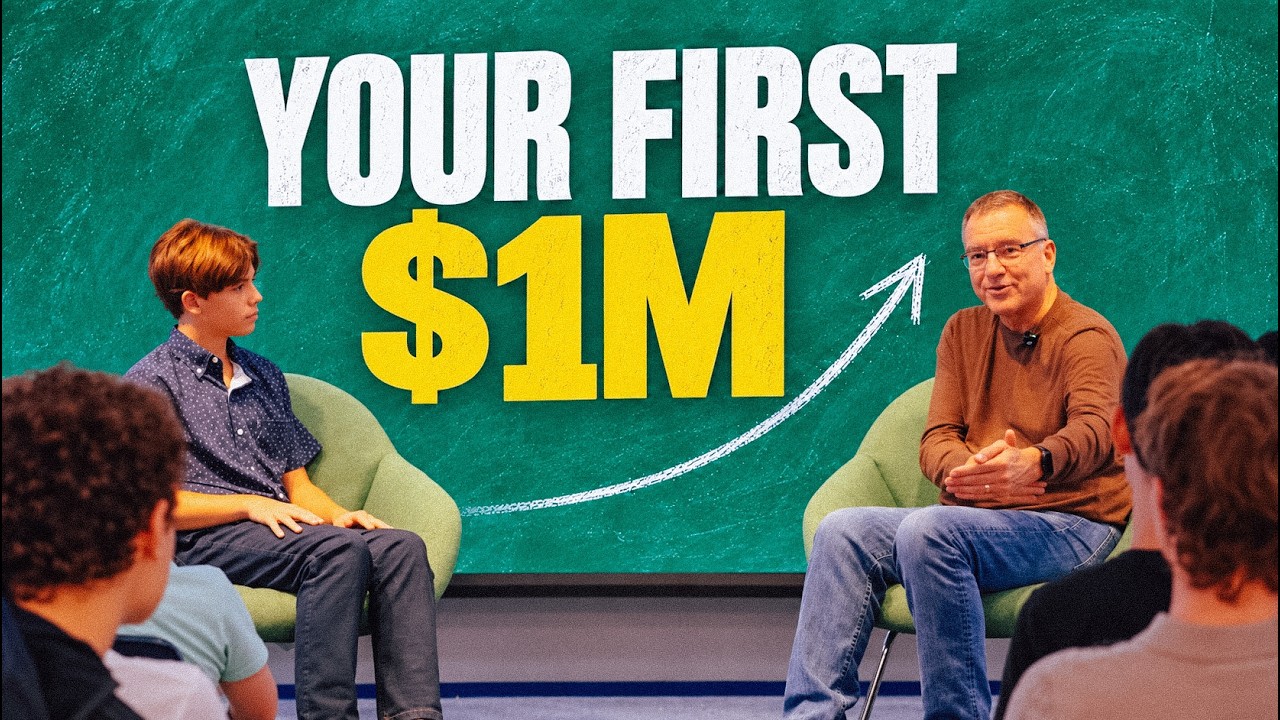

What is the Future of Education? Freakonomics’ Steve Levitt & Google Chief Technologist Ben Gomes
教育的未来是什么?《魔鬼经济学》Steve Levitt 对谈 Google 首席科学家 Ben Gomes

17 分钟阅读Education
【教育对话】《魔鬼经济学》作者对话谷歌技术领袖:数据素养将取代死记硬背 Steve Levitt 与 Ben Gomes 深入探讨了教育的终极目的。在 AI 可以秒出答案的未来,学校应该教什么?他们认为,“数据直觉”和“定义问题的能力”将成为新的基础教育核心。对话展现了技术专家与经济学家在教育公平与技术普惠上的碰撞。 🎙️ 访谈人物介绍 Steve Levitt:《魔鬼经济学》作者,芝加哥大学教授。 Ben Gomes:谷歌高级副总裁、首席架构师。 核心议题:AI 对传统考试的冲击、数据科学在基础教育中的位置、教育公平的技术路径、教师角色的重构。 关键词:教育未来、数据素养、谷歌、魔鬼经济学
章节 1:颠覆传统与“按需学习”的兴起
Chapter 1: Upending Convention and the Rise of Just-in-Time Learning
📝 本节摘要:
本节中,谷歌的Ben Gomes与《魔鬼经济学》作者Steve Levitt探讨了教育改革的必要性。Levitt指出目前的教育体系在数百年的修修补补中迷失了目标——即培养适应性强、充满好奇心的人。双方深入讨论了从传统的“万一有用式学习”(Just-in-case learning)向适应现代科技变化的“即时式学习”(Just-in-time learning)转变的必要性。Levitt还坦率地批评了现行的评分制度,认为它迫使教师教授不重要且复杂的知识,仅仅为了区分学生等级。
[原文] [Ben Gomes]: How do I get an AI tutor in every kid's ear? How is there not a stampede to get kids equipped with those tools? (dramatic classical music) So Steven, I've been a huge fan of your books for a long time.
[译文] [Ben Gomes]: 我该如何把AI导师送到每个孩子的耳边?为什么没有出现一股让孩子们装备这些工具的热潮?(戏剧性的古典音乐)Steven,我是你书的忠实粉丝很久了。
[原文] [Steve Levitt]: Thank you.
[译文] [Steve Levitt]: 谢谢。
[原文] [Ben Gomes]: "Freakonomics" and "SuperFreakonomics," and they showed the power of data to upend conventional wisdom. And I, you know, now you're interested in education. And do you think there's a lot of need to upend conventional wisdom in education?
[译文] [Ben Gomes]: 《魔鬼经济学》和《超爆魔鬼经济学》,它们展示了数据颠覆传统智慧的力量。我知道你现在对教育感兴趣。你认为在教育领域非常需要颠覆传统智慧吗?
[原文] [Steve Levitt]: (laughing) Oh my god. I mean, I think we've layered, for hundreds of years, we've layered little changes on top of what already existed. And I feel like we've just so lost sight of the objective, which is to create a new generation of people who are well-adjusted and curious and excited about the world. It's an incredibly hard problem, and I'm not sure I have any of the answers. But I think we want something different from our education system.
[译文] [Steve Levitt]: (大笑)天啊。我的意思是,我认为数百年来,我们只是在现有的基础上层层叠加微小的改变。我觉得我们已经完全迷失了目标,即培养出适应性强、充满好奇心且对世界感到兴奋的新一代人。这是一个极其困难的问题,我不确定我是否有答案。但我认为我们希望从教育系统中得到一些不同的东西。
[原文] [Ben Gomes]: So I think in the past, people studied something that was gonna hold them for all their lives. And now, technology is changing much more rapidly, so there's a need to adapt to technology. And do you think that that changes also, it seems that that changes sort of fundamentally how education needs to work to create those skills to adapt.
[译文] [Ben Gomes]: 我认为在过去,人们学习的东西能支撑他们的一生。而现在,技术变化得更快,所以需要适应技术。你是否认为这也改变了——这似乎从根本上改变了教育需要如何运作,以创造那些适应性的技能。
[原文] [Steve Levitt]: Yeah, I'm stealing it from one of my podcast guests. I can't remember which one it was, but he talked about just-in-case learning, which is what we do now. Like I'm gonna teach you about calculus or about geometry or chemistry or Shakespeare, whatever it is, just in case, some moment in your life 20 years from now, you're gonna say, "Oh my god. I need to know a right triangle. I need to make some calculation about it." Versus just-in-time learning, which is something which actually makes sense.
[译文] [Steve Levitt]: 是的,我要借用我播客一位嘉宾的观点。我不记得是哪一位了,但他谈到了“万一有用式学习”(just-in-case learning),这就是我们现在所做的。比如我要教你微积分、几何、化学或莎士比亚,不管是什么,只是为了以防万一,在你20年后的生命中某个时刻,你会说:“天啊,我需要知道直角三角形。我需要对此进行计算。”与之相对的是“即时式学习”(just-in-time learning),这才是有意义的。
[原文] [Steve Levitt]: So you and I have both, at various points in our life, faced problems where we didn't know what the answers were, and we didn't have the right tools. And what I do and I assume you do is say, "Well, I gotta go learn those tools." And I was equipped to be able to learn those tools. So I think you're right. In a world in which you do not know what you'll be doing five years from now or 20 years from now, building, and a world in which so much knowledge is now at our fingertips, cramming your head full of facts and formulas is not the answer to managing the future. It's not even, you know?
[译文] [Steve Levitt]: 你和我在生活中的不同阶段都曾面临过不知道答案的问题,也没有合适的工具。我做的,我也假设你会做的是说:“好吧,我得去学习那些工具。”而且我具备学习这些工具的能力。所以我认为你是对的。在一个你不知道自己5年或20年后会做什么的世界里,在一个如此多的知识触手可及的世界里,把满脑子塞满事实和公式并不是应对未来的答案。甚至根本不是,你知道吗?
[原文] [Ben Gomes]: Yeah, yeah.
[译文] [Ben Gomes]: 是的,是的。
[原文] [Steve Levitt]: It's self-evident that it's not. But it's hard for the system to catch up, in part, because the system is built on evaluation, right, of giving grades. And as an educator teaching at the University of Chicago, look, I'm the worst offender in the world. I need to somehow give some kids A's and some kids B's. And the easiest way to do that is to teach them things that don't matter in ways that are somewhat hard and overcomplicated so that I have a way to separate them out. (Ben laughing) And it's terrible and I'm embarrassed about it. But it's what I do in my everyday life.
[译文] [Steve Levitt]: 这显然不是答案。但系统很难跟上,部分原因是这个系统建立在评估之上,对吧,也就是打分。作为在芝加哥大学任教的教育者,听着,我是世界上最糟糕的冒犯者。我需要设法给一些孩子A,给另一些孩子B。而最简单的方法就是用某种困难且过度复杂的方式教他们一些无关紧要的东西,这样我就有办法把他们区分开来。(Ben大笑)这很糟糕,我对此感到尴尬。但这正是我日常生活中所做的事情。
- 章节 2:AI赋能与“掌控式学习”的新模式
- 章节 3:效率带来的挑战与教师角色的重塑
- 章节 4:从“不得不学”到“想要学”的未来愿景
正在加载后续章节…